Erbium · element 68
The pink tinted metal whose ions keep the internet's light signals alive across oceans
Key facts
Every message that crosses an ocean by fibre optic cable passes through erbium. Light pulses fade as they travel down glass, and after around a hundred kilometres they need a boost. The device that does this is a short length of fibre laced with erbium ions and pumped with a laser. The erbium absorbs the pump light and re-emits it at exactly the wavelength the signal uses, amplifying it without ever turning it back into electricity. Without this trick the modern internet would be far slower and vastly more expensive.
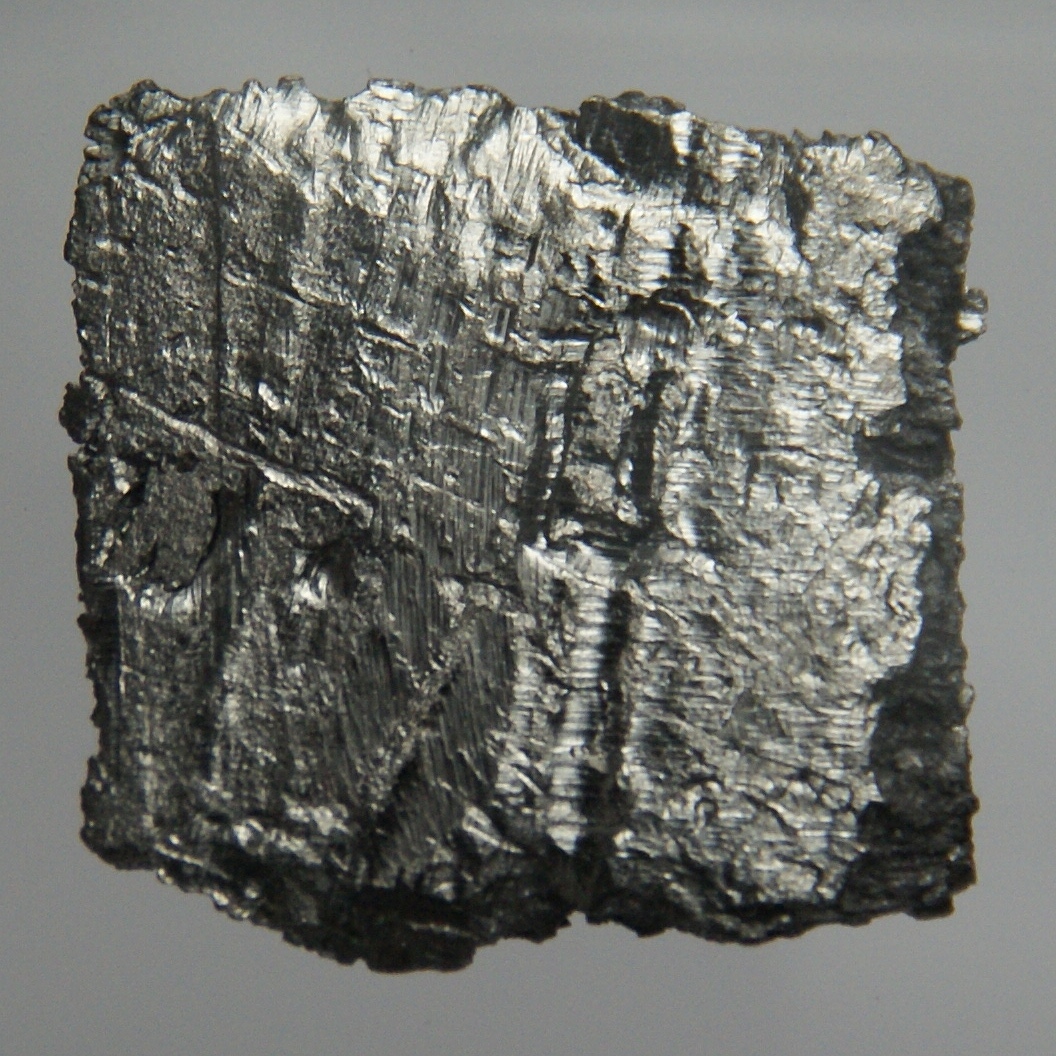
Erbium is a soft, silvery lanthanide, and one of the four elements named after the Swedish village of Ytterby. Its salts and oxide are a distinctive pink, and that colour, together with its remarkable optical behaviour, gives erbium a much bigger role in daily life than its obscurity suggests.
Where it is found
Erbium occurs with the other rare earths in monazite, bastnäsite and xenotime, and in the ion adsorption clays of southern China that dominate heavy rare earth supply. It is one of the more abundant of the heavy lanthanides, about as common in the crust as tin, though still only a minor constituent of any ore.
As with every lanthanide, the metal is obtained by repeated solvent extraction to separate the erbium, followed by conversion to a fluoride or chloride and reduction with calcium. Global production runs to hundreds of tonnes a year, most of it destined for glass, optics and alloys.
How it was discovered
In 1843 Carl Gustaf Mosander, working in Stockholm, separated the oxide yttria into three fractions, naming the new ones erbia and terbia. Later chemists mixed up the two names, so the fraction Mosander called terbia is the one we now call erbia. Neither was pure. Over the next four decades erbia was found to conceal ytterbium, scandium, holmium and thulium, each discovered by picking further at the same material.
Reasonably pure erbium oxide was available by the early twentieth century, but the pure metal, like most rare earths, had to wait for the ion exchange techniques developed in the 1930s and after the Second World War.
What we use it for
The erbium doped fibre amplifier is the star. Erbium ions have an emission band around 1550 nanometres, which happens to be the wavelength at which silica glass fibre is most transparent. Amplifiers spaced along submarine and terrestrial cables keep signals strong over thousands of kilometres, and erbium doped fibre lasers are used in the same wavelength range.
Erbium also works in medicine. Erbium doped yttrium aluminium garnet lasers emit at 2.94 micrometres, where water absorbs even more strongly than at the holmium wavelength. This makes the Er:YAG laser very shallow acting, ideal for resurfacing skin, removing fine wrinkles and drilling teeth with less heat and vibration than a conventional drill.
The pink colour of erbium oxide is used in glass, glazes and imitation gemstones such as cubic zirconia, and in sunglasses and camera filters. Small amounts of erbium added to vanadium make it softer and easier to work. Erbium-169 has been used to treat inflammation in small joints.
Reading the numbers
Erbium melts at about 1529 °C, close to the melting point of pure iron, and boils near 2868 °C. Its density is 9.07 grams per cubic centimetre, noticeably heavier than iron and roughly nine times the density of water. Both figures fit the trend of rising density and melting point as you move from the light lanthanides to the heavy ones.
The configuration [Xe] 4f12 6s2 leaves two vacancies in the 4f shell. Erbium forms +3 ions in all its ordinary chemistry, and the energy levels of the remaining eleven 4f electrons are what produce both the pink colour and the 1550 nanometre emission that telecommunications depends on. Its first ionisation energy of about 589 kJ/mol and electronegativity of 1.24 are typical of the heavy rare earths. The atomic mass of 167.26 reflects six stable isotopes, with erbium-166 the most common.
Safety and the environment
Erbium has no known biological role and its compounds are considered to have low toxicity. The metal is fairly stable in dry air but tarnishes when damp, and fine powder can ignite. Erbium in optical fibre and glass is locked into the material and poses no exposure risk.
Its environmental footprint is that of rare earth mining generally: chemical waste, energy use and the handling of radioactive thorium that accompanies monazite.
Did you know?
- Erbium doped fibre amplifiers boost the light signals in nearly every long distance and undersea internet cable, operating at a wavelength where glass is most transparent.
- Erbium oxide is pink and has been used to colour glass, ceramic glazes and cubic zirconia gemstones.
- The names erbia and terbia were swapped by chemists after Mosander first proposed them in 1843.
- Er:YAG lasers work at 2.94 micrometres, a wavelength absorbed so strongly by water that they can resurface skin or drill teeth with very shallow penetration.
- Erbium is one of four elements named after the Ytterby quarry near Stockholm, the richest source of new elements in history.
More in the lanthanides
The nearest neighbours of erbium in the family, by atomic number.
See all 15 lanthanides on one page, or browse all 118 elements.
Frequently asked questions
What is erbium used for?
Erbium's biggest use is in fibre optic amplifiers that keep internet and telephone signals strong over long distances. It is also used in medical and dental lasers, as a pink colourant for glass and imitation gems, and as an additive that makes vanadium easier to work.
Why is erbium used in fibre optic cables?
Erbium ions emit light at around 1550 nanometres, the wavelength at which silica glass fibre loses the least signal. A short stretch of erbium doped fibre, powered by a pump laser, amplifies the passing signal directly as light, without converting it to electricity and back.
Why is erbium pink?
Erbium(III) ions absorb certain wavelengths of visible light, mainly in the green region, because of transitions among their 4f electrons. The light that passes through or reflects back is left with a pink hue, which is why erbium oxide, erbium salts and erbium tinted glass look pink.
Is erbium rare?
Erbium is about as abundant in the crust as tin and is one of the more common heavy rare earths. It does not form its own minerals, so it must be separated from the other lanthanides in ores like monazite and xenotime, which is what makes it costly rather than genuinely scarce.
Read next
Guess the mystery element in six tries. A new one every day, free, no sign-up.
Written by Anthony. Updated September 2026. Numerical data from Periodic-Table-JSON (CC BY-SA), cross-checked against the Erbium reference article. Spotted an error? Tell us.