Cobalt · element 27
Named after a mine goblin, painted onto Ming porcelain, and now fought over for electric car batteries
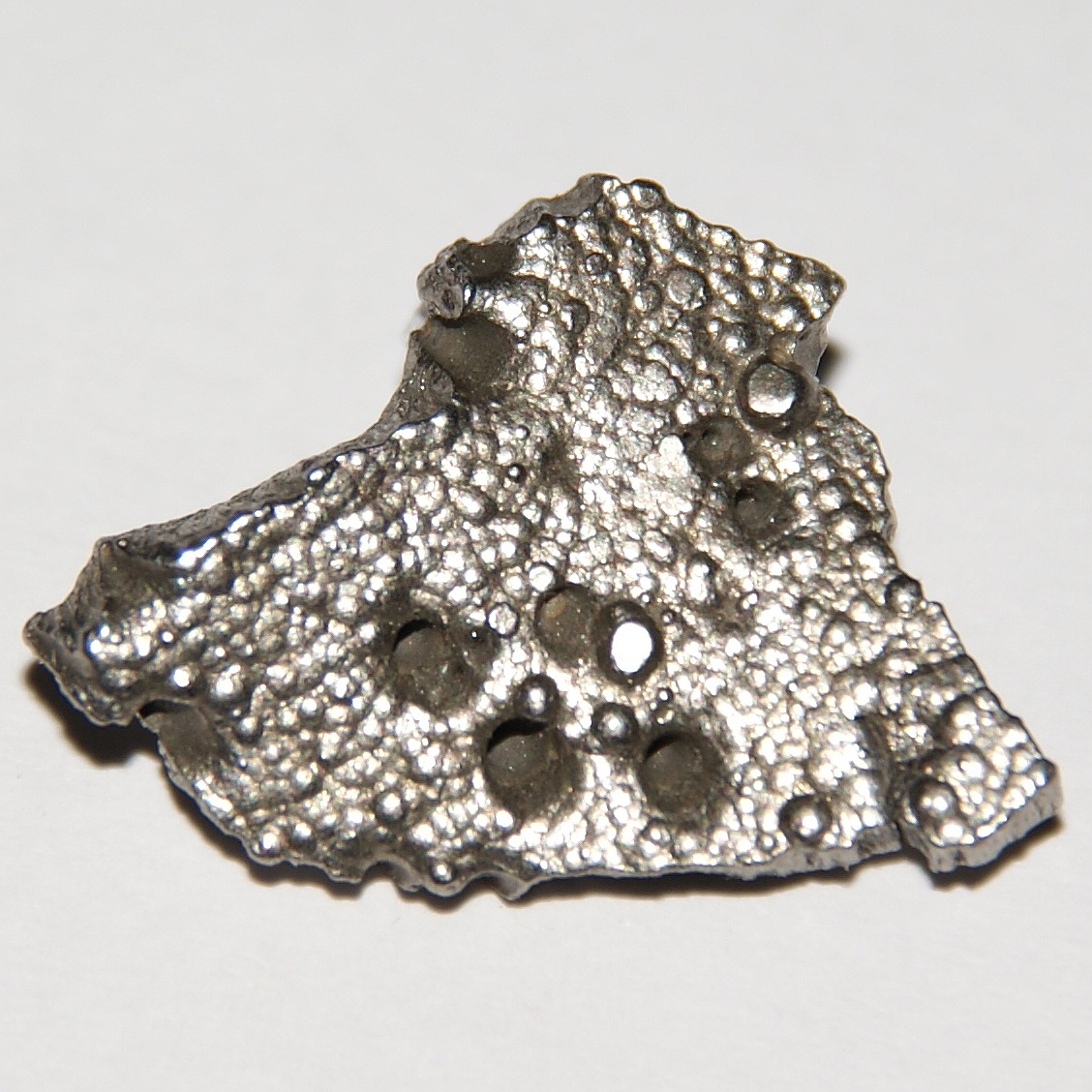
Key facts
For most of history cobalt meant one thing: blue. Cobalt compounds gave Egyptian glass, Persian tiles, Chinese porcelain and Dutch Delftware their deep blue colours long before anyone knew the metal existed. Today cobalt has a very different reputation, as the critical metal in rechargeable batteries, jet engines and cancer treatment, and as a metal whose mining raises hard ethical questions.
Cobalt is also at the centre of the only vitamin that contains a metal, vitamin B12, which your body cannot make and must get from food.
Where it is found
Cobalt rarely has ores of its own. It is mostly a by-product of copper and nickel mining. The Democratic Republic of the Congo produces around 70 per cent of the world's cobalt from the copper belt in the south of the country, with Indonesia, Russia, Australia and Canada contributing smaller shares. Cobalt minerals include cobaltite, skutterudite, and erythrite, a pink cobalt bloom that old miners used as a sign of ore below.
Cobalt is also concentrated in deep-sea manganese nodules and crusts, and in the iron-nickel cores of meteorites. It is essential for life in tiny amounts, because bacteria build it into vitamin B12, which animals then take in through their diet. Grazing animals such as sheep and cattle need cobalt in their pasture so that their gut bacteria can make the vitamin, and cobalt-poor soils cause a wasting disease in livestock.
How it was discovered
German miners in the Middle Ages found ores that looked like silver but gave off poisonous arsenic fumes when roasted and yielded no useful metal. They blamed mischievous underground spirits called kobolds, and the name stuck to the ore. Meanwhile glassmakers were using the same material as a blue pigment. In 1735 the Swedish chemist Georg Brandt showed that the blue came not from bismuth, as was then believed, but from a new metal that he isolated and named cobalt. He was the first person in recorded history to discover a metal that had been unknown to the ancients.
What we use it for
The largest use today is in lithium-ion battery cathodes. Cobalt stabilises the layered structure of the cathode, allowing batteries to store more energy and last longer, and it is in most phones, laptops and many electric vehicles. Manufacturers are working hard to reduce or remove it because of cost and supply worries.
Cobalt superalloys, which keep their strength at high temperatures, are used for jet engine turbine blades and gas turbines. Cobalt-bonded tungsten carbide makes cutting tools and drill bits, and cobalt-chromium alloys form hip and knee implants where hard-wearing surfaces are needed. Cobalt is a catalyst in oil refining and plastics manufacture, and its salts are still used as pigments and as drying agents in paint. The radioactive isotope cobalt-60 sterilises medical equipment and is used in radiotherapy.
Reading the numbers
Cobalt melts at about 1495 °C and boils at about 2927 °C, close to iron on both counts. Its density of 8.9 g/cm³ makes it a little heavier than iron. The configuration [Ar] 3d7 4s2 gives nine outer electrons, and cobalt commonly loses two or three of them; Co2+ and Co3+ have quite different chemistry. Cobalt(II) chloride is pink when hydrated and blue when dry, which is why it is used as a humidity indicator. Like its neighbours iron and nickel, cobalt is ferromagnetic, and it keeps its magnetism to a higher temperature than either, above 1100 °C. Its first ionisation energy of 760 kJ per mole is almost identical to iron's. Cobalt sits in group 9, sandwiched between iron and nickel, and it is slightly heavier than nickel despite coming before it, one of the rare places where atomic mass does not increase with atomic number.
Safety and the environment
Cobalt is essential in traces but toxic in excess. Cobalt dust and fumes can cause asthma and lung disease, and workers making hard metal tools are at risk. Some people develop skin allergies to it. In the 1960s cobalt added to beer to stabilise the foam caused heart failure in heavy drinkers before the practice was banned. The biggest concerns now are social rather than chemical: a portion of Congolese cobalt is dug by hand in small-scale mines with dangerous conditions and child labour, and battery makers face pressure to trace and clean up their supply chains. Recycling old batteries to recover cobalt is an important part of the answer.
Did you know?
- Cobalt, isolated in 1735, was the first metal to be discovered since ancient times.
- Vitamin B12 is the only vitamin that contains a metal atom, a single cobalt at its centre.
- Cobalt-60 gamma sources sterilise a large share of the world's disposable medical equipment.
- The blue of Ming dynasty porcelain came from cobalt ore, some of it imported from Persia.
- Cobalt stays magnetic up to about 1115 °C, the highest such temperature of any element.
- Paper soaked in cobalt chloride turns from blue to pink as the air gets more humid, a classic home-made weather indicator.
More in the transition metals
Column-mates come first, since elements in one column have outer electrons arranged in a similar way and tend to behave alike; the rest are the nearest neighbours in the family.
See all 38 transition metals on one page, or browse all 118 elements.
Compare Cobalt with another element
Each comparison has a side-by-side data table and a plain-English summary of the differences.
Frequently asked questions
Why is cobalt used in batteries?
In lithium-ion cathodes, cobalt holds the layered crystal structure together as lithium ions move in and out, giving high energy density and a long life. It is expensive and its supply is concentrated in one country, so newer cathode designs use less of it or none.
Is cobalt magnetic?
Yes. Cobalt is one of three elements that are ferromagnetic at room temperature, along with iron and nickel, and it keeps its magnetism to a higher temperature than either. It is a key ingredient in powerful samarium-cobalt and alnico magnets.
Why is cobalt blue?
The metal itself is grey. The famous blue comes from cobalt(II) ions surrounded by oxygen atoms in glass or ceramic glazes, an arrangement that absorbs red and yellow light and reflects blue. Other arrangements give pink, green or violet.
Is cobalt toxic?
In tiny amounts it is essential as part of vitamin B12. Larger doses damage the heart, thyroid and lungs, and inhaled cobalt dust is a recognised occupational hazard, so exposure in workplaces is limited.
Read next
Guess the mystery element in six tries. A new one every day, free, no sign-up.
Written by Anthony. Updated September 2026. Numerical data from Periodic-Table-JSON (CC BY-SA), cross-checked against the Cobalt reference article. Spotted an error? Tell us.