Helium · element 2
The gas that was found in the Sun 27 years before anyone found it on Earth
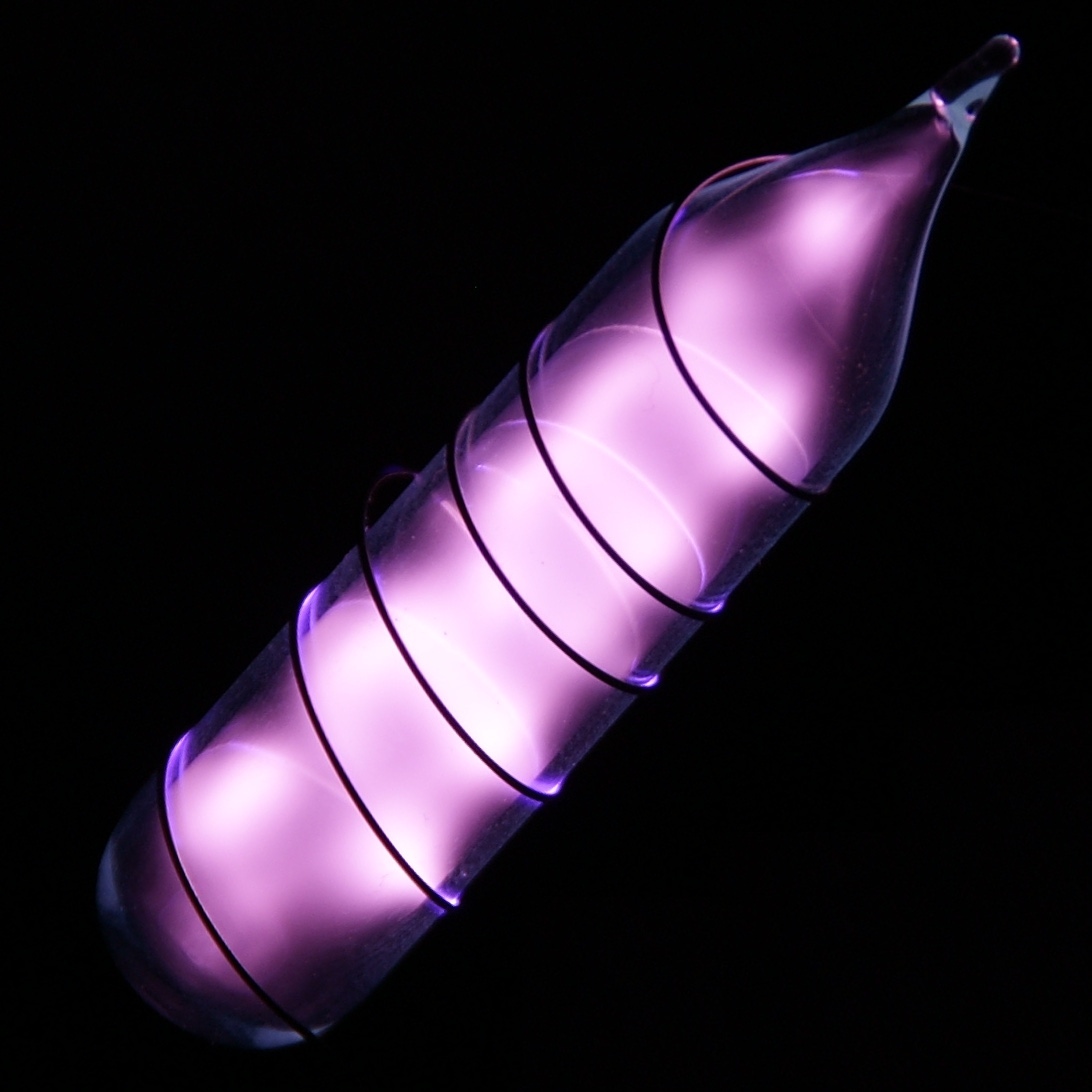
Key facts
Helium is the second lightest element and the least reactive of them all. It is a colourless gas with no smell or taste, and it refuses to form stable compounds with anything under normal conditions. Every helium atom has two protons and two electrons, and those two electrons completely fill its only shell. That full shell is the reason helium is so aloof.
It is also the only element to be identified in space before it was found on Earth. Astronomers spotted its fingerprint in sunlight in 1868, and its name comes from Helios, the Greek word for the Sun. On Earth it is rare in the air but is trapped in some natural gas deposits, where it has been collecting slowly from the radioactive decay of rock for hundreds of millions of years.
Where it is found
Helium is the second most abundant element in the universe after hydrogen, making up about a quarter of ordinary matter by mass. Most of it formed in the first few minutes after the Big Bang, and stars have been adding more ever since by fusing hydrogen.
On Earth the story is very different. Helium is so light that it escapes from the atmosphere into space, so air contains only about five parts per million. The helium we use is extracted not from air but from underground natural gas. Uranium and thorium in rocks decay by emitting alpha particles, which are simply helium nuclei. Over geological time this helium seeps into gas reservoirs. Once released into the air, helium is lost for good.
How it was discovered
During a total solar eclipse in India in 1868, the French astronomer Pierre Janssen studied the light from the Sun's outer layer with a spectroscope and saw a bright yellow line that did not match sodium or any other known element. The English astronomer Norman Lockyer saw the same line later that year and concluded it belonged to a new element, which he and the chemist Edward Frankland named after the Sun.
Many scientists were sceptical of an element known only from a line in a spectrum. Proof came in 1895 when William Ramsay in London treated the uranium mineral cleveite with acid, collected the gas it gave off and found the same yellow line. Helium turned out to be the first of a whole family of unreactive gases.
What we use it for
The most important use of helium is as a coolant. It stays liquid at temperatures colder than any other substance, so it is used to chill the superconducting magnets in MRI scanners and in particle accelerators such as those at CERN.
Helium also shields welding arcs, purges rocket fuel tanks, detects leaks in sealed systems and provides a safe lifting gas for weather balloons and airships. Deep-sea divers breathe helium mixed with oxygen to avoid the confusion caused by nitrogen at depth. Because helium cannot be manufactured, hospitals and research laboratories increasingly recycle it.
Reading the numbers
Helium boils at about minus 269 degrees Celsius, only about four degrees above absolute zero, which is lower than any other element. At normal pressure it never freezes at all. The melting point in the data, around minus 272 degrees, is only reached by squeezing it to more than twenty times atmospheric pressure.
Its density of about 0.18 grams per litre is around one seventh that of air, so helium balloons float. The electron configuration 1s2 means its first and only shell is full. Helium has no interest in gaining, losing or sharing electrons, which is why it has no electronegativity value and the highest first ionisation energy of any element, 2372 kilojoules per mole. It sits at the top of group 18 with the other noble gases, even though its full shell holds only two electrons rather than eight.
Safety and the environment
Helium is not toxic and not flammable. The danger comes from what it replaces. Breathing pure helium pushes oxygen out of the lungs, and people have died after inhaling from large cylinders or bags. Liquid helium can cause severe cold burns and can boil violently if a container is damaged.
Environmentally, helium is harmless, but it is a finite resource. Every balloon released adds helium to the atmosphere, from which it escapes into space, and the Earth's supply is replenished only at the slow pace of radioactive decay. Conserving it for medicine and science is a growing concern.
Did you know?
- Helium was identified in sunlight in 1868, decades before it was found on Earth.
- Liquid helium cooled below about minus 271 degrees Celsius becomes a superfluid with zero viscosity that can climb the walls of an open container.
- Every alpha particle emitted by a radioactive atom is a helium nucleus, so most helium on Earth is the product of radioactive decay.
- Speaking after breathing helium raises the pitch of your voice because sound travels almost three times faster in helium than in air.
- Helium is the only element that cannot be frozen at normal atmospheric pressure, however cold it gets.
- The United States set up a Federal Helium Reserve near Amarillo, Texas, in the 1920s to guarantee a supply for military airships.
More in the noble gases
These share a column with helium, so their outer electrons are arranged in a similar way and they tend to behave alike.
See all 7 noble gases on one page, or browse all 118 elements.
Compare Helium with another element
Each comparison has a side-by-side data table and a plain-English summary of the differences.
Frequently asked questions
Is helium flammable?
No. Helium is completely unreactive and will not burn under any conditions. The famous airship fires of the 1930s involved hydrogen, not helium, which is why helium replaced it as a lifting gas.
Why does helium make your voice sound high?
Your vocal cords vibrate at the same rate, but sound travels much faster through helium than through air. That shifts the resonances of your throat and mouth upward, making the voice sound thin and squeaky. Breathing it from a large cylinder is dangerous because it displaces oxygen.
Is the world running out of helium?
Not immediately, but supplies are limited and cannot be made artificially. Helium comes from a handful of natural gas fields, and once it is released into the air it drifts off into space. Prices have spiked several times, and hospitals and laboratories now recycle what they use.
Why is helium a noble gas?
Its two electrons completely fill its only electron shell, so the atom has no tendency to gain, lose or share electrons. That makes it chemically inert, the defining property of the noble gases in group 18.
Read next
Guess the mystery element in six tries. A new one every day, free, no sign-up.
Written by Anthony. Updated September 2026. Numerical data from Periodic-Table-JSON (CC BY-SA), cross-checked against the Helium reference article. Spotted an error? Tell us.